Physical Address
304 North Cardinal St.
Dorchester Center, MA 02124
Physical Address
304 North Cardinal St.
Dorchester Center, MA 02124
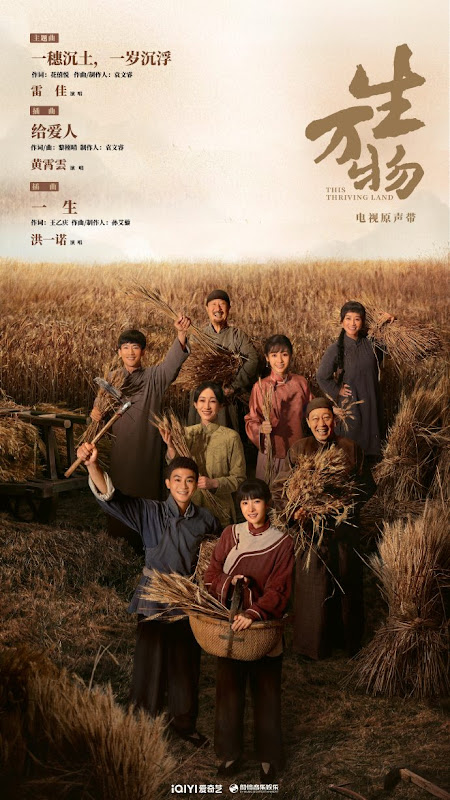

Broadcast on CCTV and iQiyi | 39 Episodes | Starring Yang Mi & Ou Hao
When This Thriving Land premiered on August 13, 2025, few expected it to break new ground in the already competitive world of Chinese period dramas. At first glance, it seemed like a familiar blend of rural hardship, romance, and revolution. But with its rich storytelling, unforgettable performances, and emotionally charged character arcs, the series quickly proved it was anything but formulaic.
Set during a turbulent time in China’s 20th-century history, the show beautifully balances sweeping historical events with the intimate, deeply personal journey of one woman determined to rewrite her destiny—and help others do the same.
At the center of This Thriving Land is Ning Xiuxiu, played with astonishing grace and grit by Yang Mi, one of China’s most beloved actresses.
Xiuxiu’s life changes dramatically on the day of her wedding. What should have been a day of joy is shattered when she’s kidnapped by bandits. But the real betrayal comes from her own father, Ning Xuexiang (Ni Dahong), the richest man in Tianni Temple Village, who refuses to pay her ransom—because he won’t part with his land.
Instead, he marries off her sister, Ning Susu (Xing Fei), to Xiuxiu’s childhood sweetheart, Fei Wendian (Zhang Tianyang), cementing Xiuxiu’s status as a castaway from her own family.
Rather than return home in shame, Xiuxiu makes a radical choice: she marries Feng Dajiao (Ou Hao), a poor but kind-hearted peasant, and begins a new life among the very people her family once looked down on.
Xiuxiu’s journey is not one of revenge, but of rediscovery. She trades silk for soil, and learns that the land her father clings to so tightly isn’t just wealth—it’s survival for the villagers. Farming becomes more than just labor; it becomes a metaphor for transformation.
We watch Xiuxiu evolve from a pampered daughter into a symbol of strength, resourcefulness, and rebellion. Her hands, once unaccustomed to the plow, soon lead others in reclaiming their lives and dignity.
Xiuxiu’s strength inspires other women in the village to challenge long-held feudal ideologies. Under her leadership, they:
This is where This Thriving Land shines brightest. The story isn’t just about Xiuxiu’s personal growth—it’s about the collective awakening of an entire rural community.
The romance between Xiuxiu and Feng Dajiao is a slow burn that feels earned, not manufactured. Their love is forged not through grand gestures but in shared hardships—planting crops, facing starvation, defending their neighbors, and raising a family amidst chaos.
Ou Hao brings sincerity and warmth to Dajiao, a character who initially seems simple but soon reveals deep emotional layers. The couple’s relationship is marked by mutual respect and quiet resilience—an antidote to the melodramatic romances so common in historical dramas.
While Yang Mi and Ou Hao anchor the show, This Thriving Land is a true ensemble drama. Every character has a purpose, a past, and a future. Notable performances include:
The show is packed with over 70 supporting characters, each bringing a different facet of rural Chinese life into focus—from the mischievous child soldiers to the elderly storytellers who preserve village history.
At its core, This Thriving Land is about survival—but not just physical survival. It’s about preserving dignity, reclaiming identity, and redefining community. Here are some of the key themes the series tackles:
To the villagers, land isn’t just property—it’s legacy, security, and belonging. The show explores how feudal ownership of land created cycles of inequality, and how land reform became a revolutionary act.
Rarely do period dramas center female solidarity as powerfully as this one. From farm work to self-defense, from education to political action, the women of Tianni Temple Village become the true backbone of resistance.
Set against the backdrop of Japanese occupation and internal upheaval, the series doesn’t shy away from the brutal realities of war. The villagers become reluctant warriors, forced to defend not only their land but their way of life.
Directed by Liu Jiacheng (The Battle at Lake Changjin, In the Name of the People), the show brings the countryside to life in breathtaking detail.
Every frame is soaked in authenticity—from the mist rolling over rice paddies at dawn to the claustrophobic tension of a small home hiding rebels. The color grading subtly shifts from soft earth tones in peaceful times to stark grays and reds during war scenes.
Stylist Duan Xiaoli deserves praise for the detailed costume design, which captures the transition from traditional Han garments to more utilitarian clothing worn by peasants and revolutionaries alike.
With only a few episodes aired at the time of writing, This Thriving Land has already received a perfect 5.0 rating from early viewers.
Fans on Chinese platforms like Douban and Weibo are praising:
Critics are calling it a “spiritual successor” to classics like The Story of Qiu Ju and Red Sorghum, though many argue it surpasses them in emotional range and narrative ambition.
The story is adapted from Qian Juan Yu Jue Jue (缱绻与决绝) by Zhao Defa, a noted Chinese author known for his explorations of rural history and human resilience.
Screenwriter Wang He does a remarkable job of maintaining the novel’s literary depth while making it accessible to a wide audience. The script is rich with metaphor and moral tension, but never feels preachy or slow.
In a year dominated by fantasy epics, idol dramas, and glossy urban romances, This Thriving Land feels like a much-needed return to human-centered storytelling.
It’s not just a drama—it’s a reflection on who we are when stripped of wealth, status, and safety. It’s a reminder that revolution doesn’t always begin with weapons—it sometimes begins with a woman picking up a hoe, and refusing to be owned.
You can catch This Thriving Land on: